Financial Dashboard — Track Portfolio Finances
The Financieel dashboard provides a portfolio-wide overview of your financing and loan performance.
Open it under Dashboards → Financieel dashboard.
This dashboard combines financing data from your properties. Incomplete or outdated financing information can lead to inaccurate portfolio-wide calculations and forecasts.
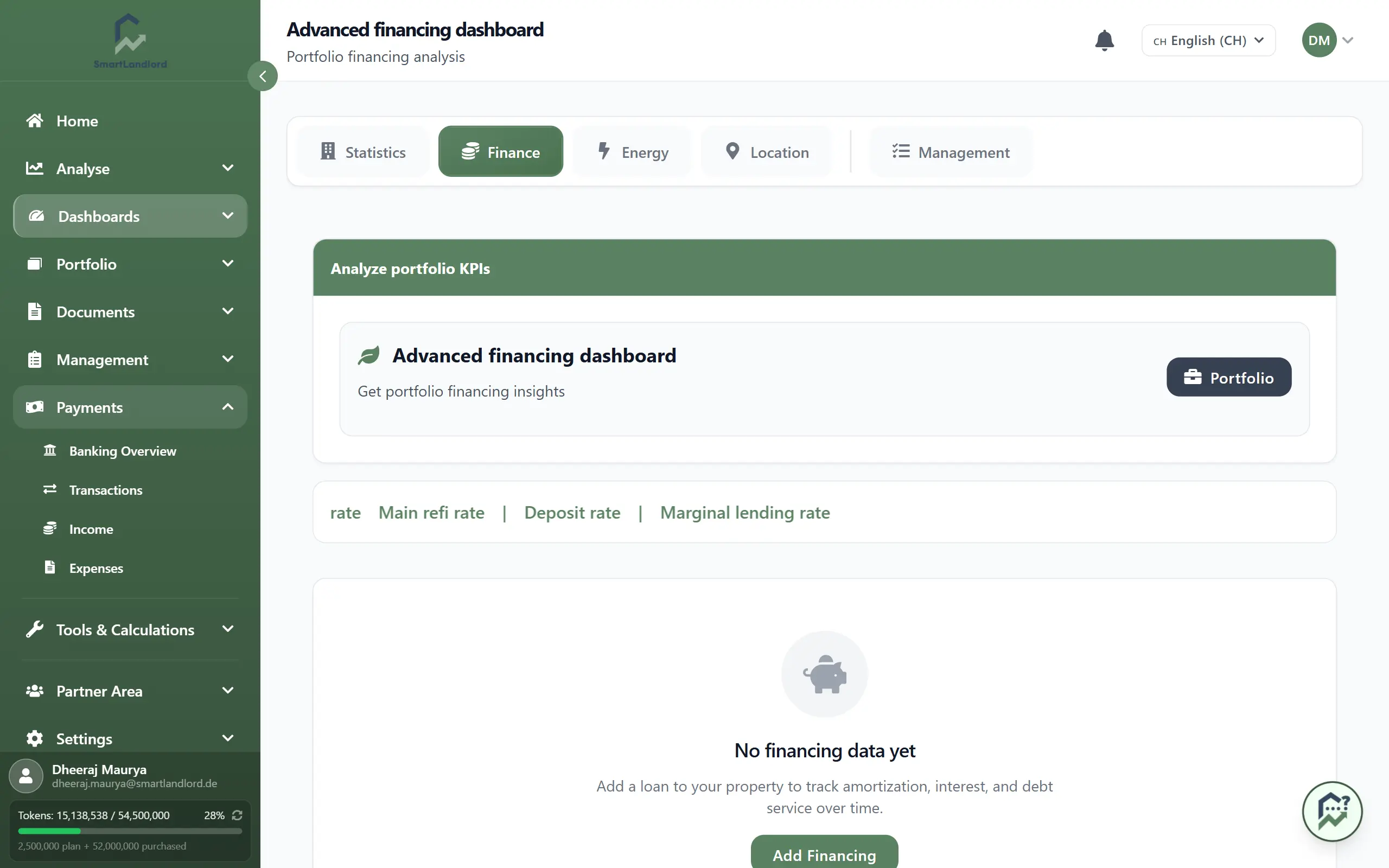
What you see
The dashboard is divided into several sections that help you understand how your portfolio is financed and how your loans affect long-term performance.
Belangrijke cijfers / KPI's
This section provides a summary of the most important financing metrics across your portfolio.
Key figures may include:
- Total outstanding debt.
- Rental income.
- Expenses.
- Net cashflow.
- Equity.
- Financing-related ratios and indicators.
These metrics help you quickly assess the financial health of your portfolio and identify areas that may require attention.
Reviewing these figures regularly can help you identify financing risks, cashflow pressure, or changes that may affect portfolio performance.
Overzicht
The portfolio overview displays financing information for each property.
Use this section to:
- Review loan details across your portfolio.
- Compare financing structures between properties.
- Identify properties with higher financing costs.
- Understand how individual loans contribute to overall portfolio performance.
This overview is particularly useful when managing multiple financed properties.
The overview allows you to review financing information without opening each property individually, making it easier to understand the overall financing structure of the portfolio.
Pay particular attention to properties with unusually high financing costs or weak cashflow performance.
Diagrammen
The diagrams section presents financing information in a visual format.
Depending on your portfolio data, diagrams may show:
- Debt development over time.
- Capital service obligations.
- Repayment progress.
- Financing cost trends.
- Equity growth.
These visualizations help you identify long-term trends and better understand the impact of financing decisions.
Charts can provide a quick overview of financing developments and make it easier to identify changes that may not be immediately visible in tables or detailed records.
Afschrijvingsplan (samengevoegd)
This section combines amortization data from all portfolio loans into a single schedule.
The aggregated amortization plan allows you to:
- Review annual repayment progress.
- Track remaining debt over time.
- Understand future financing obligations.
- Analyze long-term equity development.
This view is useful for financial planning and forecasting.
Reviewing repayment schedules regularly can help you prepare for future financing obligations and understand how debt levels will change over time.
Keeping financing data current
The information displayed in the dashboard is based on the financing information stored for your properties.
To keep the dashboard accurate:
- Review financing records periodically.
- Update financing information when loan details change.
- Verify repayment information when necessary.
- Keep property financing records current.
Accurate financing information helps ensure that portfolio-wide calculations, projections, and summaries remain reliable.
PDF export
The dashboard includes a PDF export option for sharing and documenting financing information.
Exported reports can be used for:
- Internal portfolio reviews.
- Discussions with financial advisers.
- Loan and refinancing planning.
- Long-term financial record keeping.
If financing information changes, generate a new report so that it includes the latest available data.
The exported report reflects the information currently displayed in the dashboard.
Best practices
- Review financing metrics regularly to understand how debt affects cashflow.
- Monitor repayment progress and remaining loan balances.
- Compare financing structures across properties when evaluating performance.
- Use amortization schedules when planning future investments or refinancing.
- Export reports periodically to maintain a historical record of portfolio financing.
- Keep financing records updated whenever important information changes.
- Review dashboard information regularly to identify trends and changes.
The Financieel dashboard helps you understand how your financing structure impacts portfolio performance, cashflow, and equity growth over time.